From Square Metres to Business Environment: How Office Selection Is Changing in 2026
When a company starts looking for a new office, the conversation usually begins with three familiar questions: how much space is needed, where should it be located, and what budget is available? How many people need to fit into the space, how much will it cost, and how convenient will the location be for the team?
The challenge is that a decision made today often has to continue working two, three or even five years from now, when the company may have a different headcount, a new way of working or additional business functions.
This is why traditional criteria are increasingly being joined by a wider set of questions. Is there room to expand? What happens if teams begin using the office differently? Is there somewhere to host a larger meeting without having to lease additional permanent space? How easy is the building to access, is there sufficient parking, how are operating costs managed, and what does the environment offer beyond the company’s own office?
Office market data for Sofia in the second quarter of 2026 points to increasingly diverse demand. According to Cushman & Wakefield Forton, 42,932 sq m of office space was transacted between April and June. The total volume was lower than in the previous quarter and the same period of 2025, but the number of deals increased, while the average transaction size fell from 1,046 sq m in Q1 to 630 sq m in Q2.
This does not automatically mean that companies have started preferring smaller offices. Q2 simply lacked the very large transactions of more than 5,000 sq m that had accounted for a significant share of activity in previous quarters. What is more interesting is the changing profile of demand. IT and telecommunications companies continue to account for the largest share of office take-up, but their proportion has fallen from more than 50% to below 30%, while wholesale trade, professional and scientific activities, administrative services and other sectors are becoming more visible.
Leasing an Office for a Company You Do Not Yet Know
The difficulty with any long-term office decision is that a business has to plan its space in advance without knowing exactly what the organisation will look like a few years from now.
At one stage the team may be growing; at another, more employees may work remotely more often. The company may need more client meeting space, temporary project areas or additional workstations for colleagues visiting from other countries. If every such change requires a new lease, an additional unit or another relocation, the office starts to constrain the organisation rather than support it.
This is where shared spaces can provide practical value beyond simply offering a different place to work. They can absorb some of the fluctuating needs that do not necessarily have to be built permanently into a company’s leased area.
At Sofia Airport Center, this role is served by Flex-R Lounge, a 300 sq m shared workspace with 50 workstations and a meeting room. Tenants can use it for individual work, discussions and meetings without having to expand their own office every time additional space is required.
Location Is No Longer Just About the Address
The way companies evaluate location is also changing. Distance from the city centre remains an easy reference point, but for many businesses other connections matter just as much: how easily employees, clients and partners can reach the building, whether there is access to major transport routes, whether sufficient parking is available, and whether administrative and operational functions can be combined within the same location.
The figures for the second quarter are particularly relevant in this respect. The area around Sofia Airport and the southern Ring Road was the second most active office submarket in Sofia during the period, with around 13,100 sq m of transacted office space. Only the office buildings along the city’s main boulevards — Tsarigradsko Shose, Bulgaria and Nikola Vaptsarov — recorded a higher volume.
There can be many reasons why a company chooses one location over another, and this type of statistic does not prove that one area is universally “better”. What it does show is that locations outside the traditional city centre can play a significant role in the office market when they respond to specific business needs.
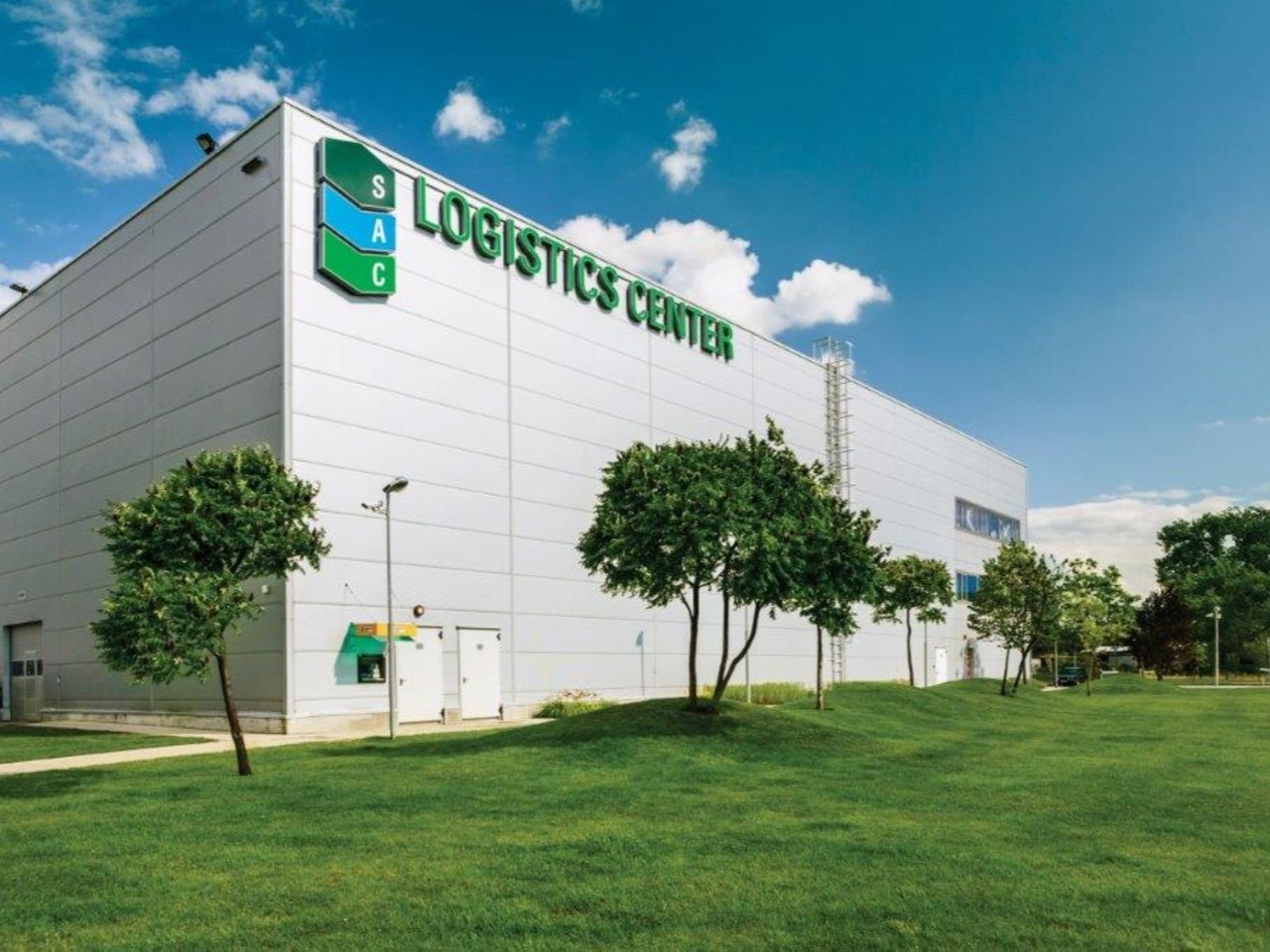
At Sofia Airport Center, this logic extends beyond office space. The complex combines offices and warehouse facilities, while its current development includes the new B04 logistics building. In June, SAC announced that owner Revetas Capital was investing EUR 7 million in the project, marking the first expansion of the business park since 2012. According to the published information, 65% of the space in the new building had already been leased, while the site has the potential to accommodate a further approximately 57,000 sq m of logistics and warehouse space in the future.
From Technical Specification to Everyday Performance
During an office viewing, building automation can easily end up near the bottom of the list of criteria. For the people who eventually work there, the BMS may never become a topic of conversation, but its impact can be felt every day.
In the new B04 building, for example, the system is designed to monitor electricity, water and thermal energy consumption across individual zones and manage heating, ventilation and air-conditioning. The project also includes a photovoltaic installation, charging infrastructure for electric cars and vans, and preventive diagnostics solutions.
From an occupier’s perspective, this is no longer simply a description of a building’s technical equipment. The way resources are used, how building systems are managed and how early potential issues can be identified all have a direct effect on costs, comfort and the predictability of day-to-day operations.
When Different Business Needs Come Together in One Place
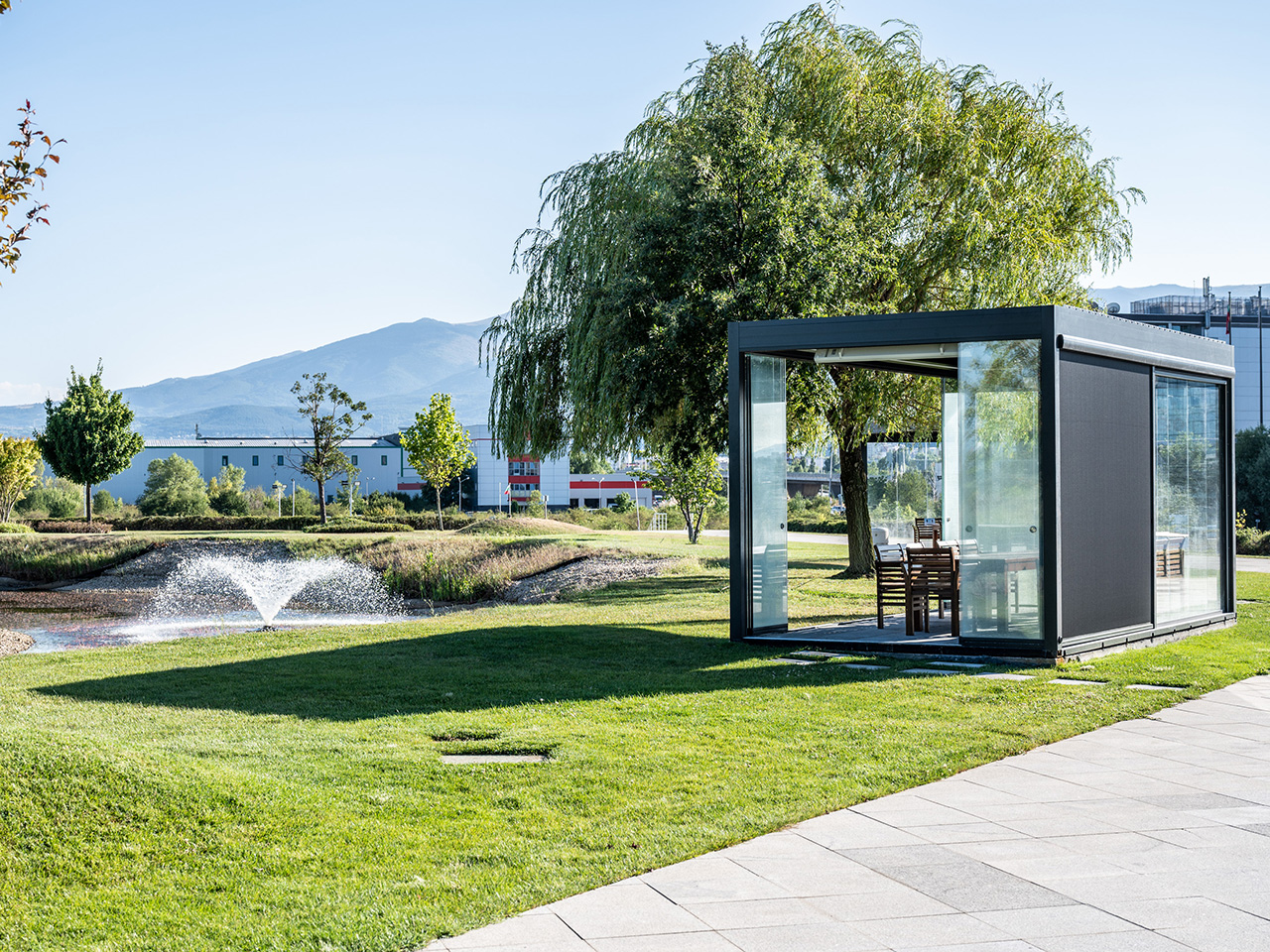
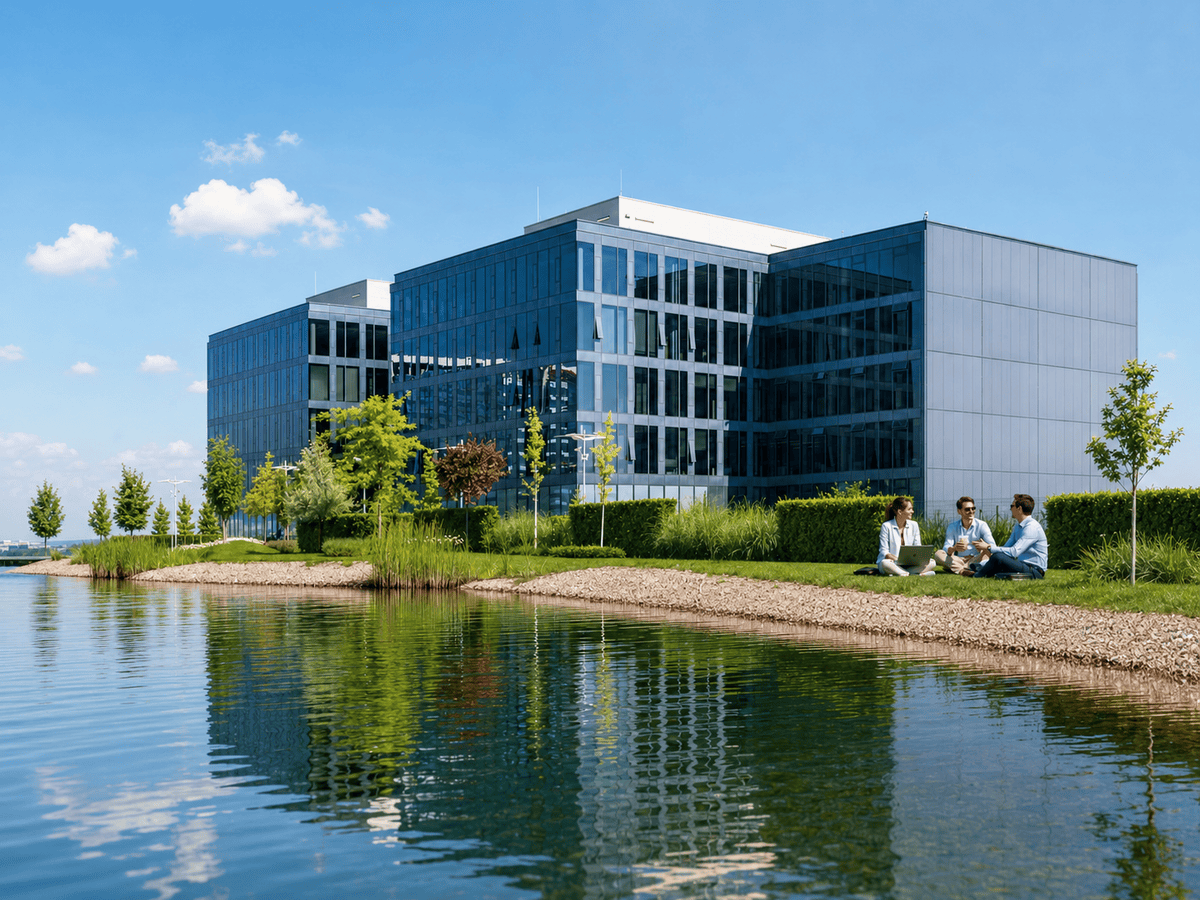
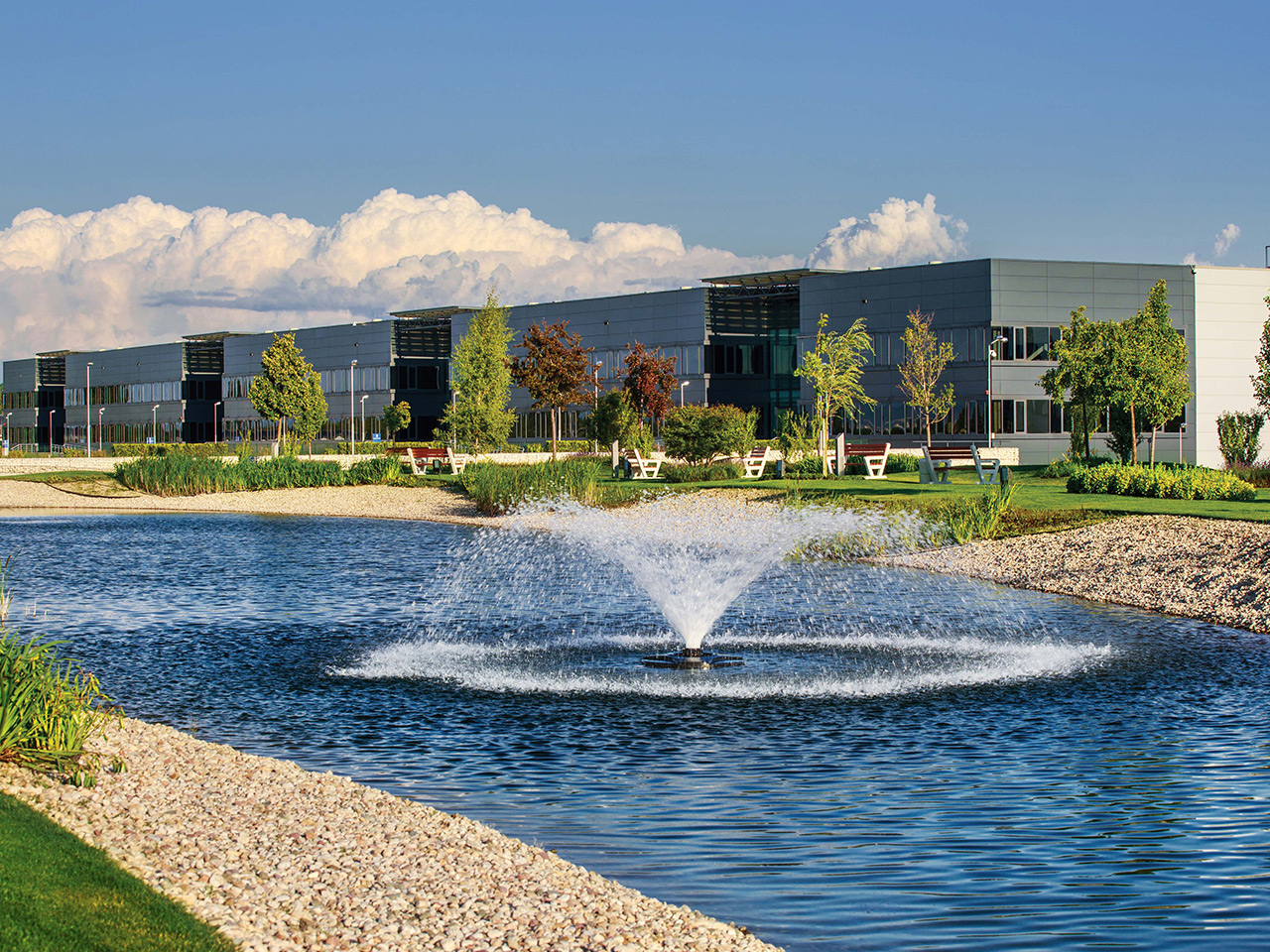
Sofia Airport Center currently offers 47,000 sq m of total leasable space across five mixed-use buildings combining office and warehouse functions. The complex also provides 940 parking spaces and 9,000 sq m of landscaped parkland with a central lake. Alongside their own offices, companies can use Flex-R Lounge and other shared areas throughout the complex.
As the logistics part of SAC continues to develop, this combination becomes increasingly relevant for companies whose office is closely connected to the rest of their operations. Administrative teams, warehouse functions, partner meetings and future expansion may all require different types of space, but they do not necessarily need to be located at different addresses.
Choosing an office is unlikely ever to stop being about space, price and location. Those factors remain part of every business calculation and ultimately have to make financial sense.
The difference is that the calculation now includes more elements that do not fit neatly into a single Excel column: room to expand, access to shared spaces, building technology, logistics, parking and the wider environment in which people spend their working day.
This is why companies looking for a new office today may benefit from looking beyond the moment when the lease is signed and considering what the business could look like several years from now. The answer may also reveal what kind of space makes sense to choose today.
Current office and logistics availability at Sofia Airport Center can be explored in the “Spaces” section of the SAC website, and the SAC team can also arrange an on-site visit.