From Business Park to Business Ecosystem: Why Mixed-Use Is Returning to the Centre of Real Estate
Not so long ago, the role of a business park was relatively clear. People arrived in the morning, spent the day in the office and went home in the evening. There were parking areas, a few places to eat and everything needed for the working day to run without major disruption.
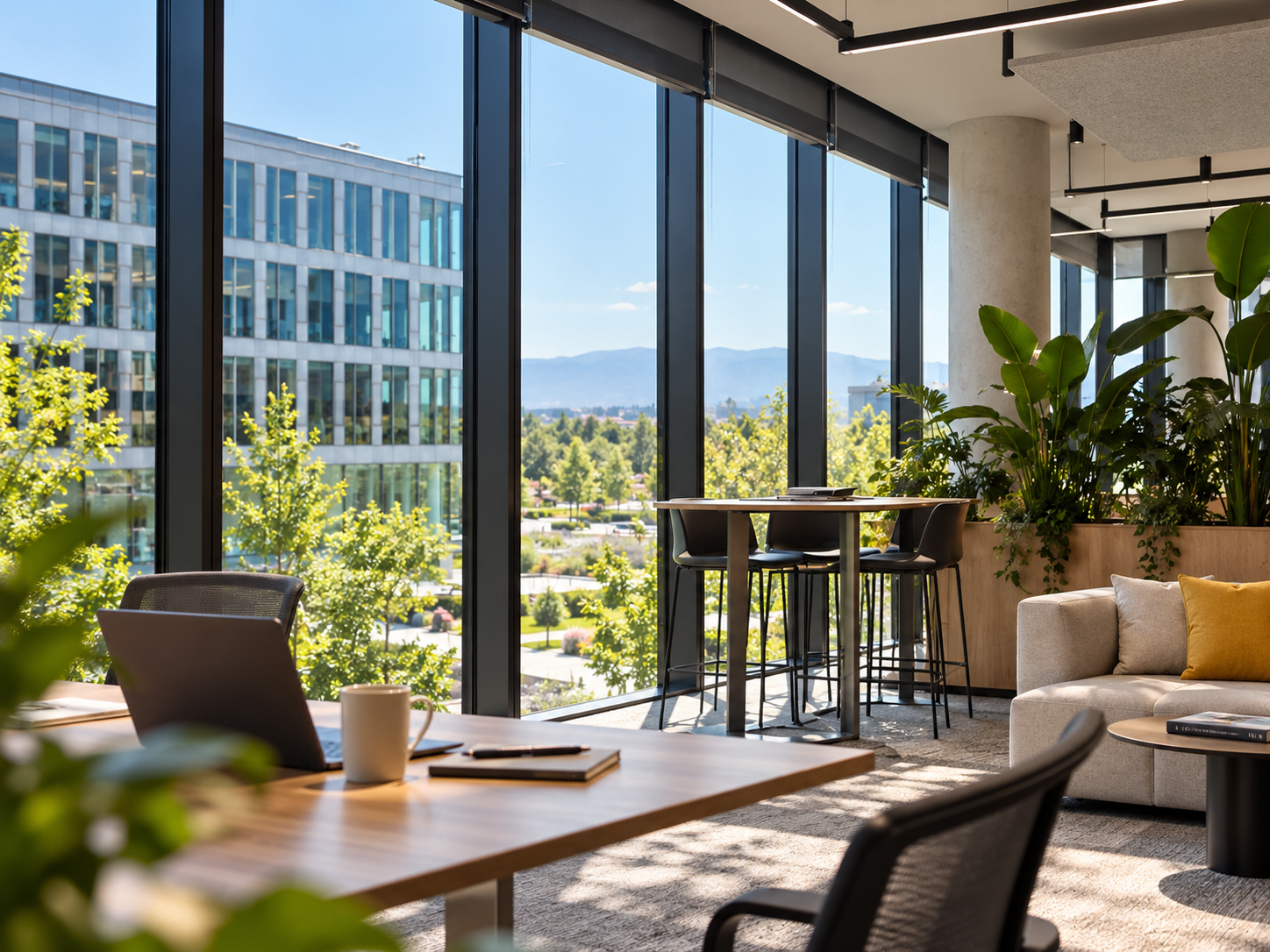
In today’s business environment, that is no longer enough for many companies or for the people who work in them. Offices are used differently, attendance is no longer the same every day, and the boundary between the workplace itself and the environment around it is becoming less distinct. For a company, what matters is not only what the office looks like inside, but also what can happen around it - where a meeting can take place outside the conference room, whether there is space to work elsewhere for an hour, how easily the building can be reached, what employees can do within the complex, and whether the location allows the business to grow without every change requiring a new address.
This shift can also be seen in the way some of Europe’s major office districts are evolving. Colliers has analysed 11 established business areas in cities including London, Paris, Amsterdam, Milan, Vienna and Warsaw, many of which were developed decades ago around the traditional model of large corporate headquarters. Today, some of them are changing by adding new functions - restaurants, services, housing, cultural venues, leisure facilities and better public spaces.
This does not automatically make every office district a better place for business, but it does show how expectations have broadened. In eight of the eleven areas analysed, vacancy rates are now below the average for their respective cities, with Colliers linking their recovery not only to building quality and transport connections, but also to the fact that they are gradually becoming more diverse urban environments.
Mixed-use developments, in turn, need to be more than a list of amenities that looks good in a presentation. They need to have a real connection to people’s everyday experience.
A restaurant, a park or a shared workspace only has value if people actually use it. If an employee still needs to get into a car to move from one part of the complex to another, or if shared spaces remain empty, their presence alone does not change much.
The difference comes when individual functions begin to solve real needs - when a meeting can take place outside the company’s own office, when someone can change environment for an hour of work, when there is somewhere to take a short break outdoors, or when different parts of a business can operate close enough to one another.
The Office No Longer Ends at the Front Door
CBRE expects demand for high-quality office space in Europe to remain strong, with accessibility and the surrounding environment becoming increasingly important alongside the building itself. With limited supply of new and modern space, the market is gradually being divided between properties that respond to these new expectations and those for which location and floor area alone are no longer enough.
This means different things for different companies. One business may prioritise public transport, another may need strong road access and parking, while a third may require its office to be close to logistics or operational functions. What they increasingly have in common is that the decision is no longer based solely on the office unit itself.
This is especially visible among companies that work in a hybrid model. If employees do not come to the office every day, there needs to be a meaningful reason for them to be there - a team meeting, collaborative work, training, a client discussion or simply an environment that allows for a different type of work from the one they can do at home.
Shared spaces are therefore no longer simply a pleasant addition to an office building. They can perform functions that individual companies do not necessarily need to create and maintain on their own.
What This Looks Like at Sofia Airport Center
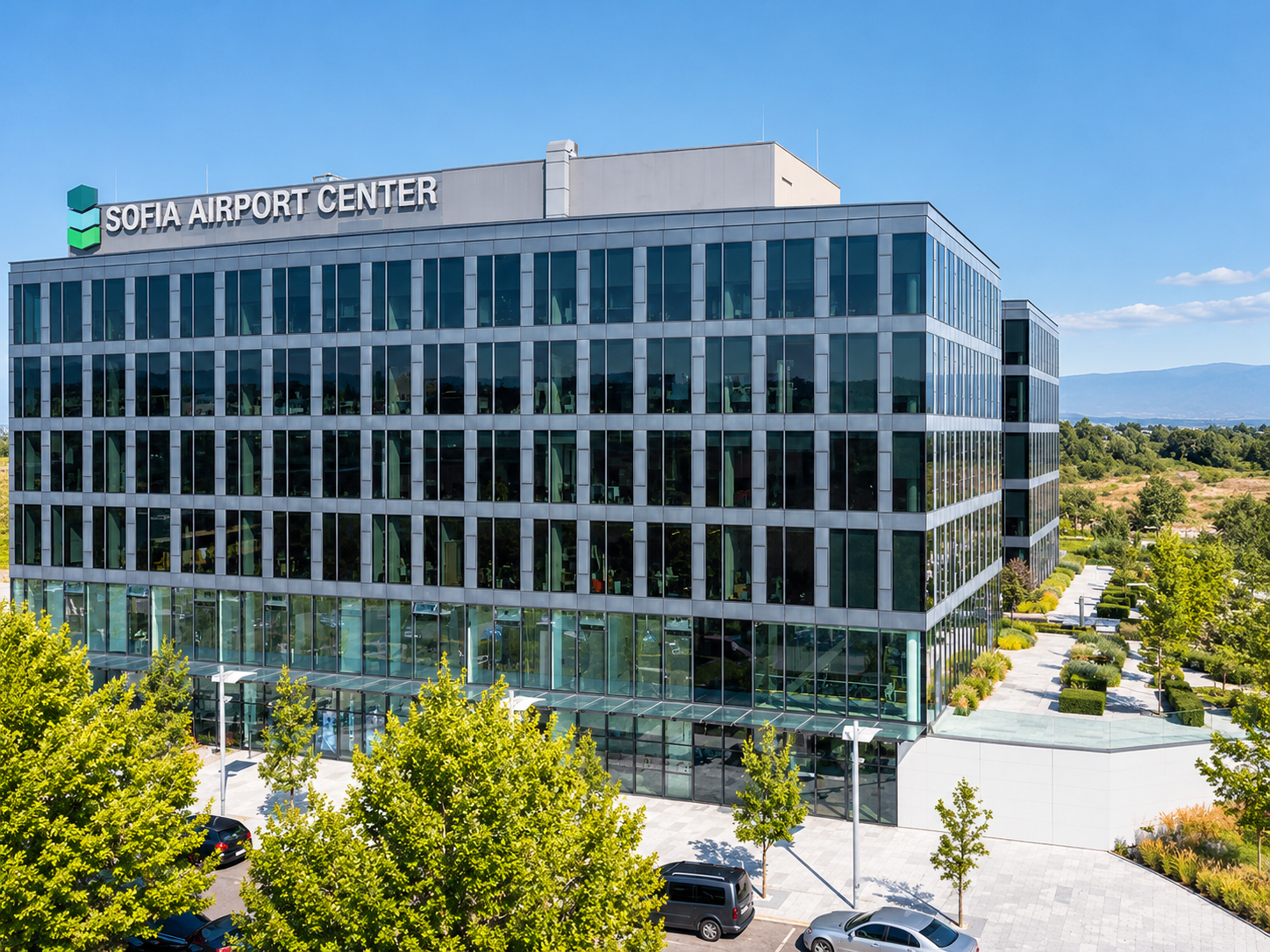
Sofia Airport Center is not a conventional mixed-use district with housing, hotels, retail and cultural functions, and there is no reason to present it as one, because it was developed around a different logic.
Office and warehouse space, shared working areas, landscaped outdoor space, services and infrastructure are brought together in one location and used by different companies and different types of business.
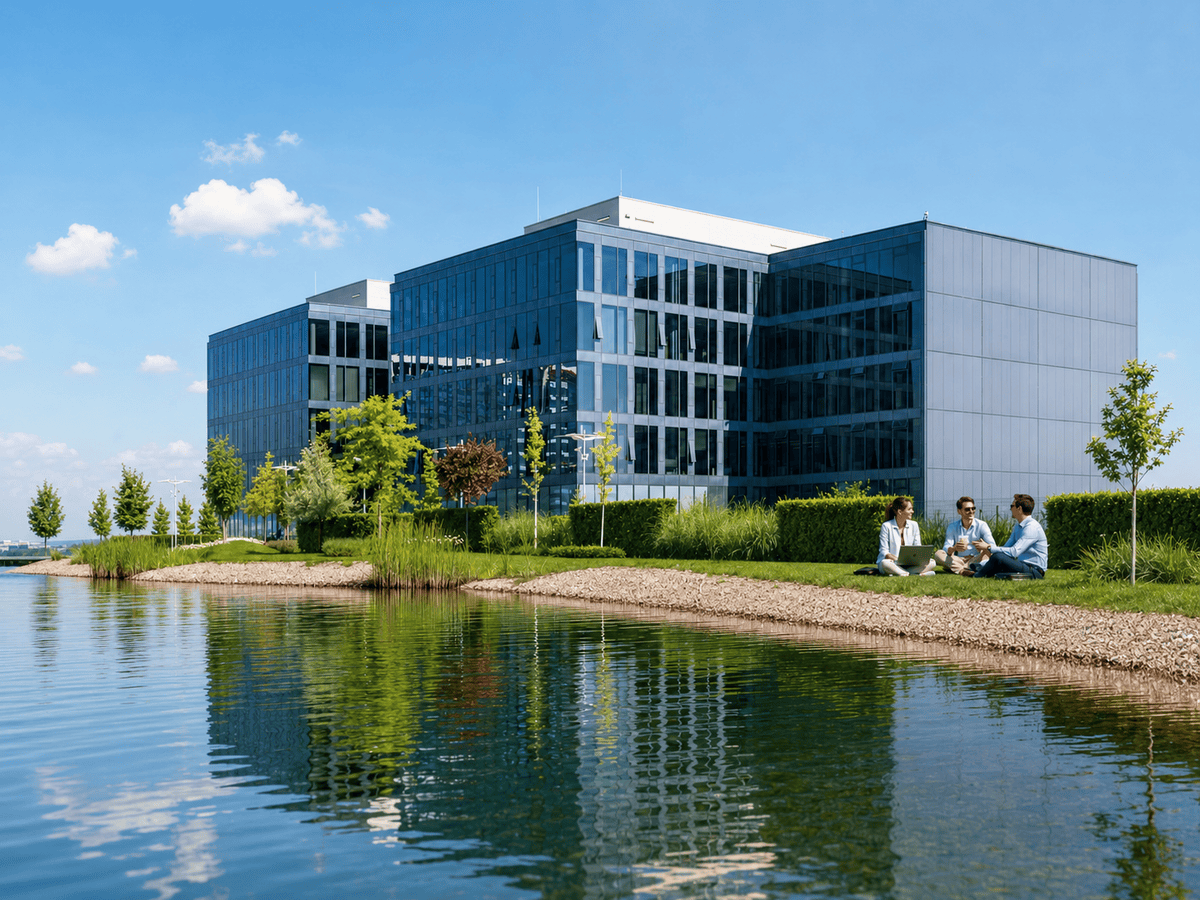
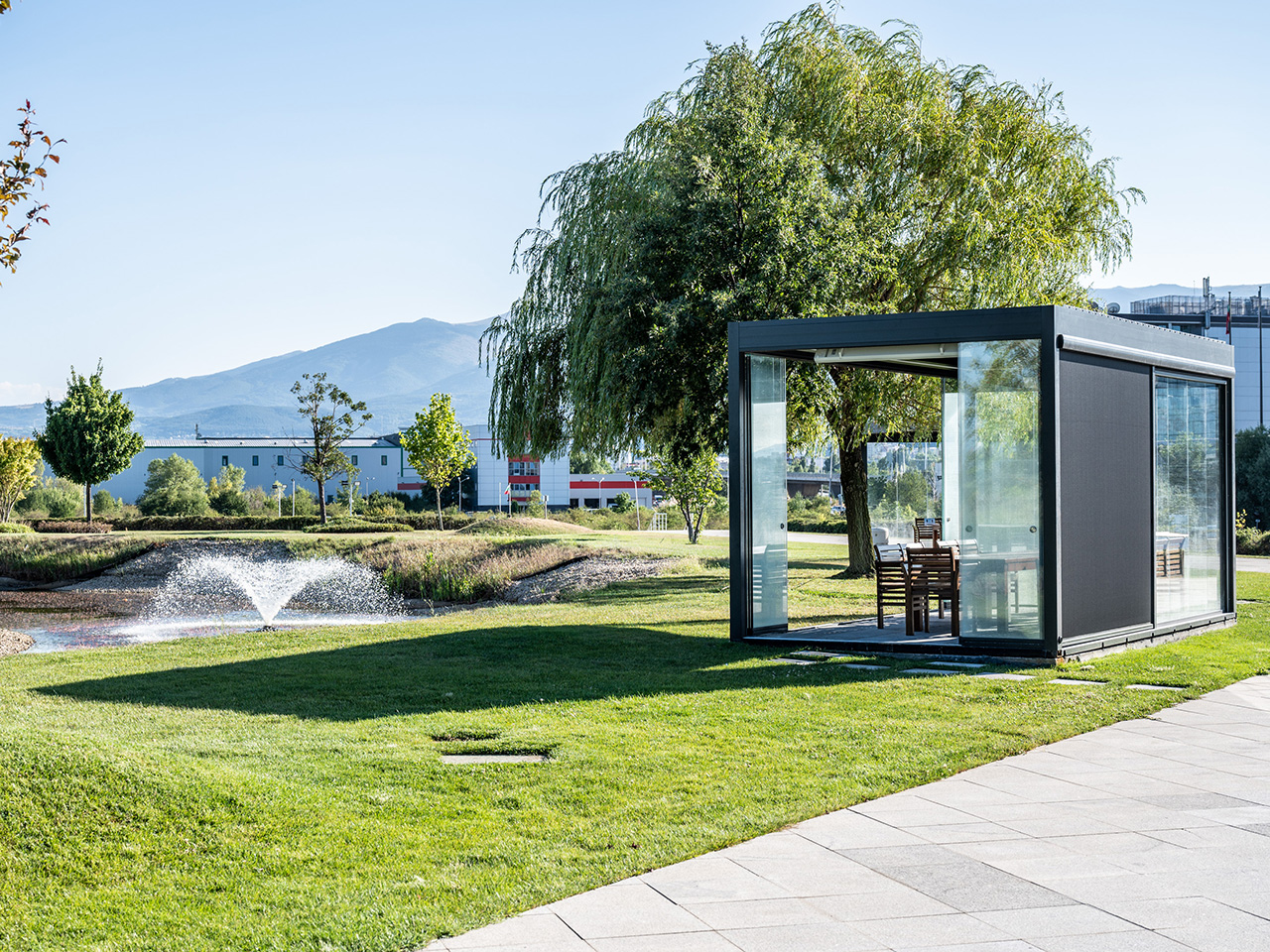
The complex currently offers more than 47,000 sq m of leasable space across five mixed-use buildings, 940 parking spaces and 9,000 sq m of landscaped parkland with a central lake. Flex-R Lounge adds 300 sq m of shared workspace with 50 workstations and a meeting room, while the development of B04 is expanding the logistics part of the complex. Each of these functions has its own role, with the real value coming from the fact that they are part of the same environment.
This model is not necessary for every business, but for companies where the office is only one part of a larger organisation, it can offer more flexibility than the conventional choice of a standalone office building.
The Space Between Buildings Matters Too
One of the changes in modern business complexes is that an increasing part of their value is created in places that are difficult to measure through the traditional logic of leasable floor area.
At SAC, the park is one such example. From the perspective of a lease agreement, it is not workspace, but in the course of a normal day it can become a place for lunch, a short conversation, a walk between two meetings or simply twenty minutes outside the building.
Shared areas and services play a similar role because, taken separately, they may look like additional features, but when they are used every day, they begin to shape the way people experience the complex as a whole.
This matters not only to employees but also to employers, because in today’s environment the workplace has become part of the conversation around attracting and retaining people. The ability to move between different types of space during the day is increasingly seen as part of a normal office experience rather than as a privilege.
For owners of business real estate, the implication is also practical: investment does not end once a building has been completed and leased. The surrounding environment needs to continue developing as well.
The Next Stage Does Not Always Require a New Address
Companies change constantly. Teams may grow, offices may be reorganised, and the need for more meeting space or new operational functions may emerge. In another business, the opposite may happen - the office footprint may be optimised while logistics operations expand.
If every such change requires finding a new location, relocating and building new infrastructure, the location itself starts to constrain the business. When different options already exist within the same complex, some of these changes can take place without the company having to start again from scratch.
This is why the evolution of older business districts across Europe is an interesting signal. Successful projects are not simply trying to restore the old model in which one area has one function and is active mainly between nine and six. They are adding new functions where there is a real need for them and gradually turning these districts into places that can be used in more than one way.
Not every business park needs to become a small city, but if the companies and people within it are changing, it is only logical that the environment around them should not remain the same.