The invisible infrastructure of a good office: light, air, temperature, and acoustics
When a person enters an office for the first time, they typically notice the space, the furnishings, the view, the size of the rooms, or the layout of the workstations. After a few weeks of daily work, however, the initial impression of the interior gives way to much more practical concerns: is there enough natural light? What is the air quality like after a long meeting? Can the temperature remain comfortable throughout the day? And how easily can one concentrate when conversations are taking place nearby?
These factors are rarely part of the initial discussion about an office, yet they directly influence how people actually use the space. This is especially true now, as hybrid work has shifted the reasons for being in the office -i t is increasingly used for meetings, team collaboration, training, or tasks that require a level of focus difficult to achieve at home.
Gensler’s *Global Workplace Survey 2026*, which polled over 16,000 office workers across 16 countries, reveals that two-thirds of respondents make some form of adjustment to their workspace to compensate for environmental shortcomings. Some devise their own solutions regarding temperature, ergonomics, or visual privacy, while noise and a lack of suitable meeting spaces remain among the most frequently cited issues.
Light, Air, and Temperature During the Actual Workday
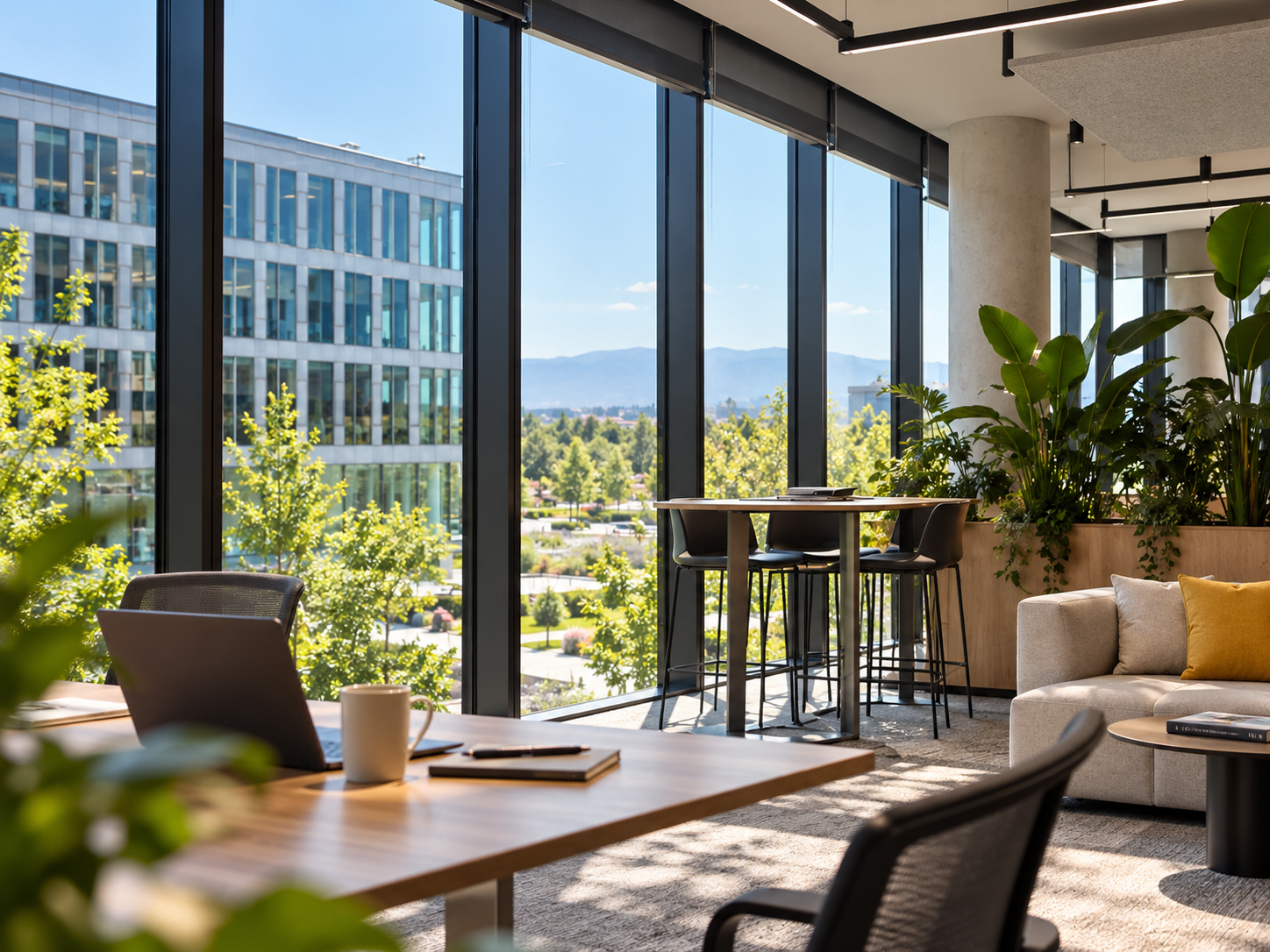
Good lighting means more than just ensuring a room is sufficiently bright. Working in front of a monitor, meeting in a conference room, and conversing in a shared open space each have different requirements. Daylight can be an asset, but only if it does not cause constant glare, excessive brightness, or the need to keep the blinds drawn for most of the day.
The same applies to air quality. A ventilation system often goes unnoticed when functioning properly; however, its absence - or inadequacy - becomes immediately apparent in a room where several people spend an hour or two in a meeting.
Research from the Healthy Buildings Program at the Harvard T.H. Chan School of Public Health explores the link between office air quality and human performance. An international study involving 302 employees across six countries found that higher concentrations of fine particulate matter and elevated CO₂ levels - indicators of poor ventilation - were associated with slower reaction times and lower performance on certain cognitive tasks.
Regarding temperature, there is no single setting that is equally comfortable for everyone; individual perception depends on the season, clothing, physical activity, and even one’s specific location within a space. For this reason, in large office environments, managing heating, cooling, and ventilation by zone is far more effective than attempting to apply a uniform setting to the entire building.
This is where technology plays a highly practical role. Building Management Systems (BMS) and automated controls allow for real-time monitoring of a building’s performance, enabling the systems to adjust dynamically to actual occupancy and usage loads, rather than simply operating according to a rigid, pre-set schedule.
Acoustics also depend on the activity being performed.
A noisy office is easy to spot, but acoustic comfort is about more than just decibel levels.
A study by Gensler and Delhom Acoustics from October 2026, involving just over 300 people across 11 cities, reveals that 40% of participants are regularly distracted by noise, while more than 80% use headphones or earbuds at their workplace.
The issue isn't always that the office is too noisy overall. Often, the problem stems from various activities taking place simultaneously in a space that fails to provide adequate separation. Four people might be discussing a project, someone else is in an online meeting, another is on a phone call - all while, at a nearby desk, someone is trying to complete a task that requires deep concentration.
This is why modern workspaces increasingly combine open-plan areas with meeting rooms, designated spots for brief conversations, and spaces for individual work. The goal isn't for the office to be silent at all times, but rather to ensure that individuals have the right environment for the specific task at hand.
This same logic applies beyond the confines of a company’s own premises; after all, not every meeting or session of focused individual work needs to take place at the very same desk.
What Sofia Airport Center Offers
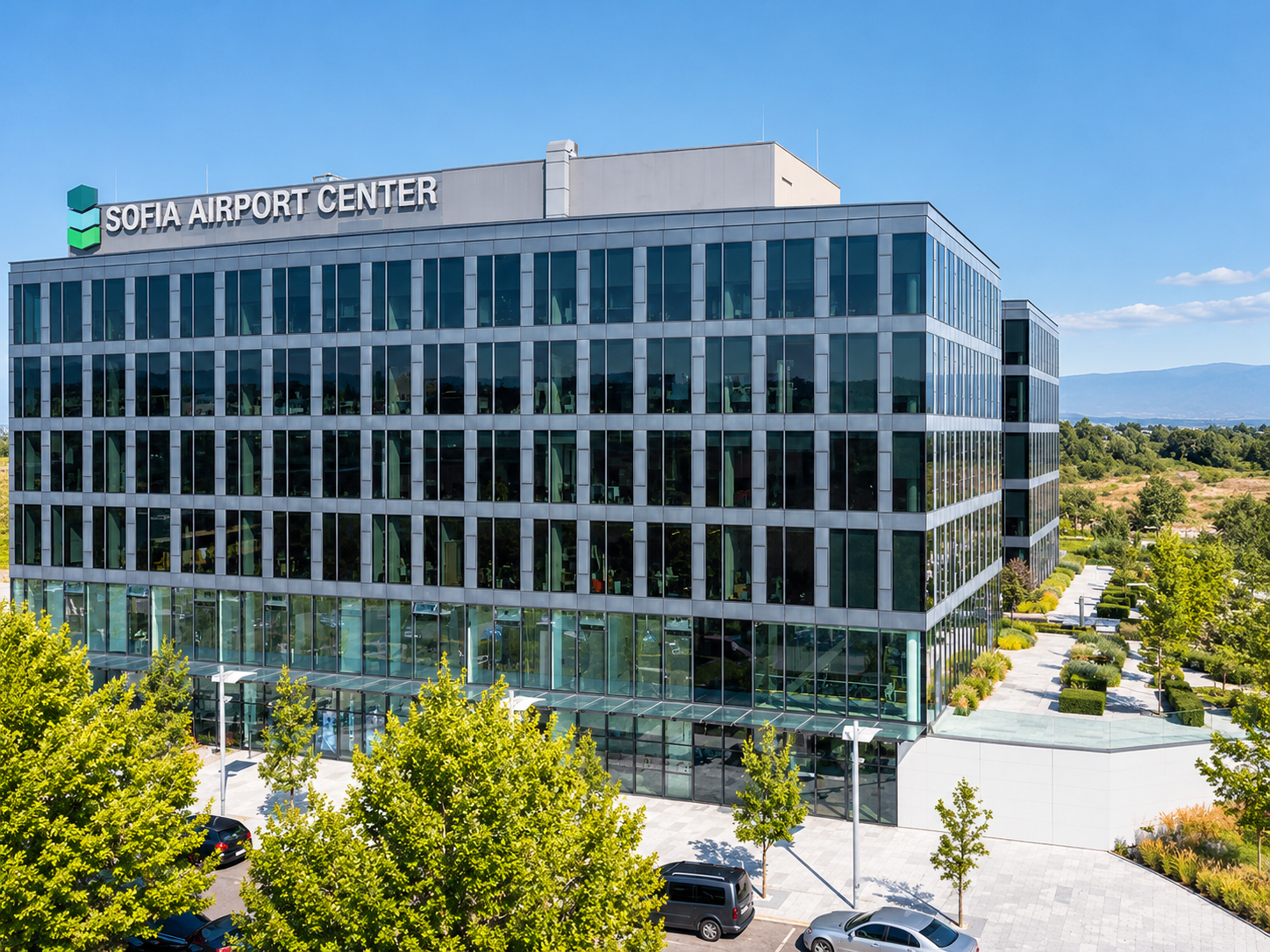
In the office buildings at Sofia Airport Center, large windows provide ample natural light, and the spatial layout can be tailored to meet the specific needs of individual tenants. The ventilation and air conditioning systems utilize VAV (Variable Air Volume) technology, managed via a BMS (Building Management System) that controls system operations and energy consumption.
In the new B04 building, this logic is further advanced: an integrated system monitors the consumption of electricity, water, and thermal energy across individual zones, while also managing heating, ventilation, and air conditioning. The system also incorporates predictive diagnostics, allowing certain issues to be identified before they impact the building's normal operation.
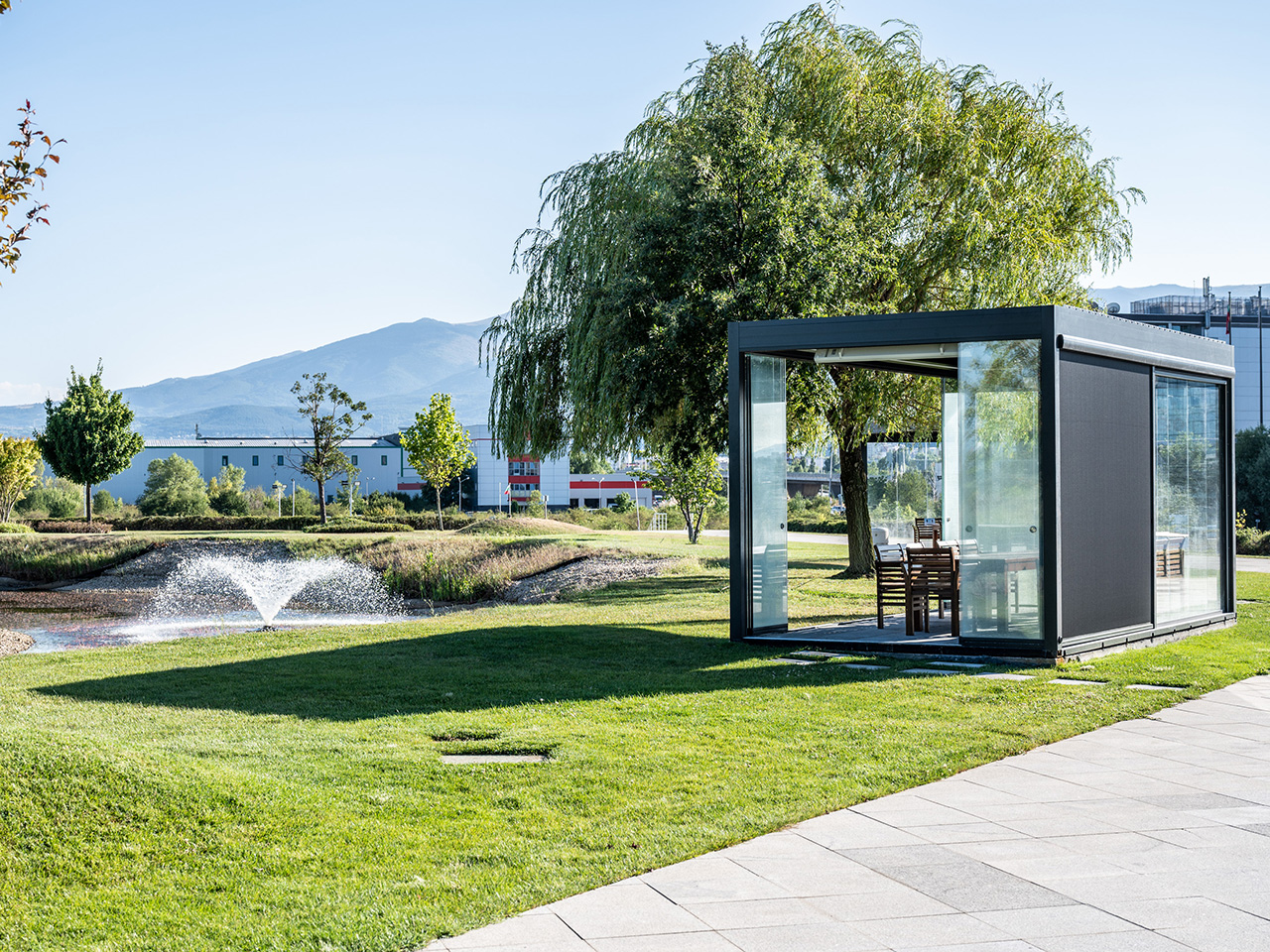
However, the work environment is defined by more than just technical systems. The "Flex-R Lounge" offers additional options for individual work and meetings outside of a company’s private office space, while a 9,000-square-meter park environment allows for conversations and breaks to take place outdoors.
This does not mean that every task requires a distinct space; rather, it means that companies and employees have a wider range of options available, depending on how a given day unfolds.
Quality reveals itself over time.
Most people won’t choose an office based on the specific model of the HVAC system or the technical calculations behind the acoustics. Yet, after months of working there, a series of small, cumulative factors determine whether the environment is truly comfortable - such as whether the air remains pleasant after a long meeting, whether surrounding conversations constantly disrupt one's concentration, whether there is sufficient natural light throughout the day, and whether there is an appropriate space available for every type of task. Therefore, the quality of an office depends not only on its architecture and technical equipment, but also on how the building is managed after it opens. Systems must be monitored, adjusted, and updated, while spaces need to be adapted to the way companies use them.
For tenants, this is increasingly becoming part of the office's actual value; for owners, it means that occupant comfort is not something addressed just once during the design phase, but rather something that must be maintained on a daily basis.