What Makes an Office Building Competitive in 2026
When discussing a high-quality office, it is easiest to start with the visible aspects - location, architecture, materials, floor plate size, or the year the building was constructed. However, the market in 2026 demonstrates that these characteristics alone are no longer sufficient.
Companies are utilizing their office spaces differently; expectations regarding energy efficiency and technology have risen, and the concept of the "work environment" is expanding well beyond the physical confines of the office itself. Consequently, a relatively new building may fail to meet modern requirements, while another - commissioned years ago - can remain fully competitive, provided it is consistently managed and developed.
This divergence is already evident in the European office market. Colliers’ latest *EMEA City Office Snapshot* highlights an widening gap between prime and secondary assets; while overall vacancy rates continue to climb, top-tier spaces maintain strong pricing performance. By the end of the second quarter of 2026, Colliers’ prime office rent index had risen by 6.6% year-on-year - the fastest growth rate recorded since the third quarter of 2023.
This implies that the mere availability of vacant office space does not solve the challenges faced by companies - not when a significant portion of that stock fails to align with the way businesses and people work today.
Quality now encompasses more than just the building itself.
CBRE’s *European Office Occupier Sentiment Survey 2026* highlights this trend from the perspective of tenants. 65% of the companies surveyed plan to relocate within the next three years, and 88% would reject a building if it lacked a feature or amenity they consider essential. Meanwhile, the share of European office stock under five years old is projected to decline to 6.8% by 2028.
Given the limited supply of new product, greater emphasis is placed on existing buildings and how they adapt. For companies, it is no longer just about location and square footage; factors such as space flexibility, common areas, accessibility, technological management, and a building’s capacity to accommodate future shifts in work patterns have become crucial.
AI is also beginning to influence these requirements. According to CBRE, some companies anticipate that technology will reduce the amount of space they need; however, there is a simultaneous growing demand for more flexible, multifunctional, and specialized spaces. This implies that the pressure is not simply to reduce square footage, but rather to ensure that the available space is utilized more effectively.
Sofia follows the same trend.
In the local market, the situation is more balanced, yet demand for high-quality space remains strong. According to CBRE, in the first half of 2026, the total speculative office stock in Sofia exceeds 1.9 million sq. m, with more than 128,000 sq. m of new space expected to be completed by the end of the year.
Data from Cushman & Wakefield Forton for the second quarter indicates approximately 275,000 sq. m of vacant office space, representing an overall vacancy rate of 11.64%. Meanwhile, asking rents for Class A space remain between €14 and €18 per sq. m, while prime office space in the central area holds steady at around €20 per sq. m.
This landscape is significant because it demonstrates that competition among buildings is not merely a matter of who has available space. Tenants have choices, which elevates the importance of features that cannot easily be offset by a lower price alone.
Post-Opening Management Matters
While part of a building's competitiveness is established during the design phase, another part is cultivated years later.
Buildings have a much longer lifespan than the technologies they employ or the operational models of the companies that occupy them. Consequently, maintenance is no longer sufficient if it is limited to merely preserving the original state. Systems must be upgraded, common areas adapted, resource consumption monitored with greater precision, and new services introduced to align with how tenants utilize the building at any given time.
This is also reflected in investment interest across Europe. Colliers notes that capital remains selective, targeting assets where value can be created through physical improvements, renovations, and better positioning of the building.
How this looks at Sofia Airport Center
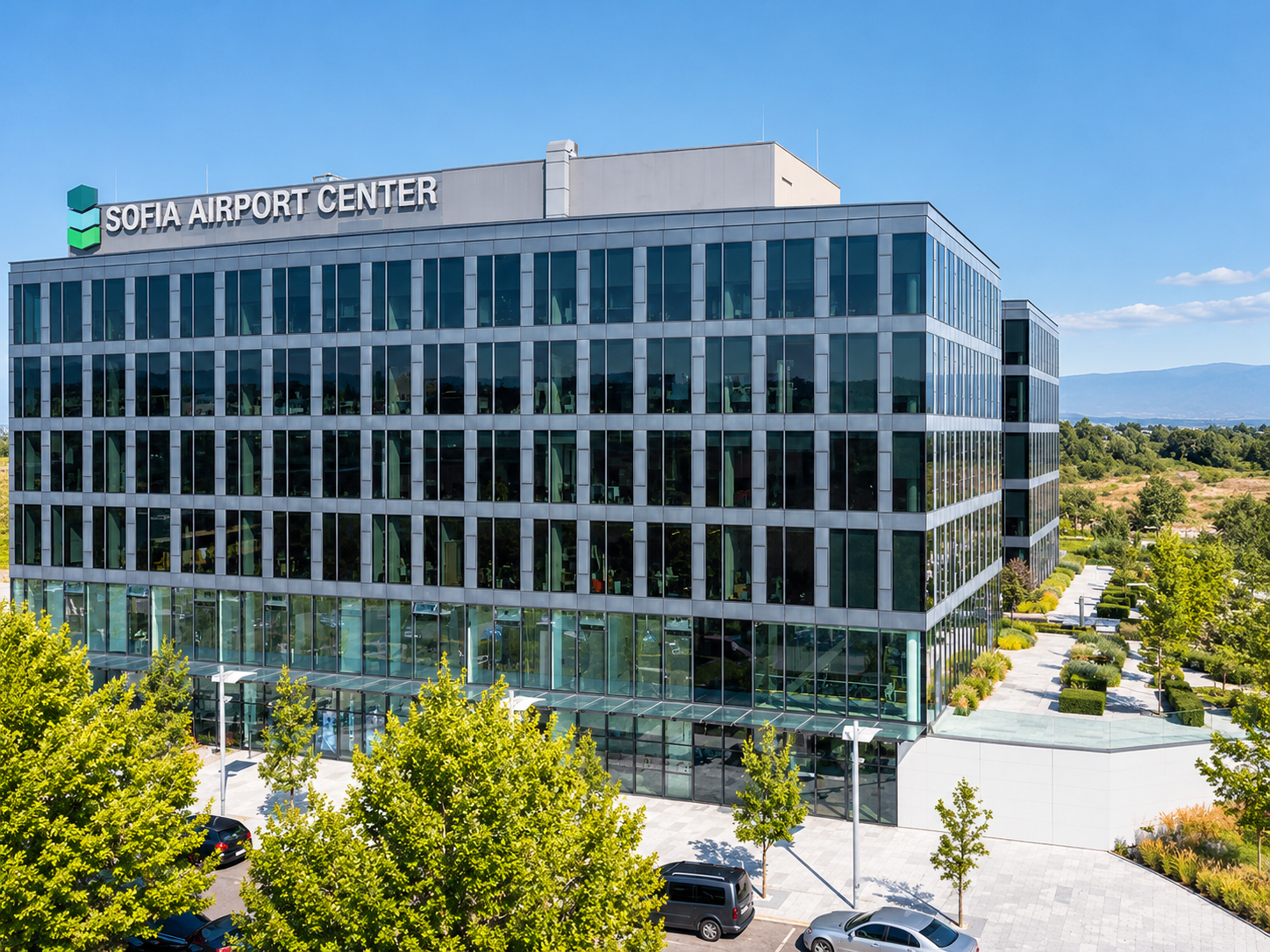
At Sofia Airport Center, this logic is evident in the gradual development of the entire complex, rather than just in the features of individual buildings.
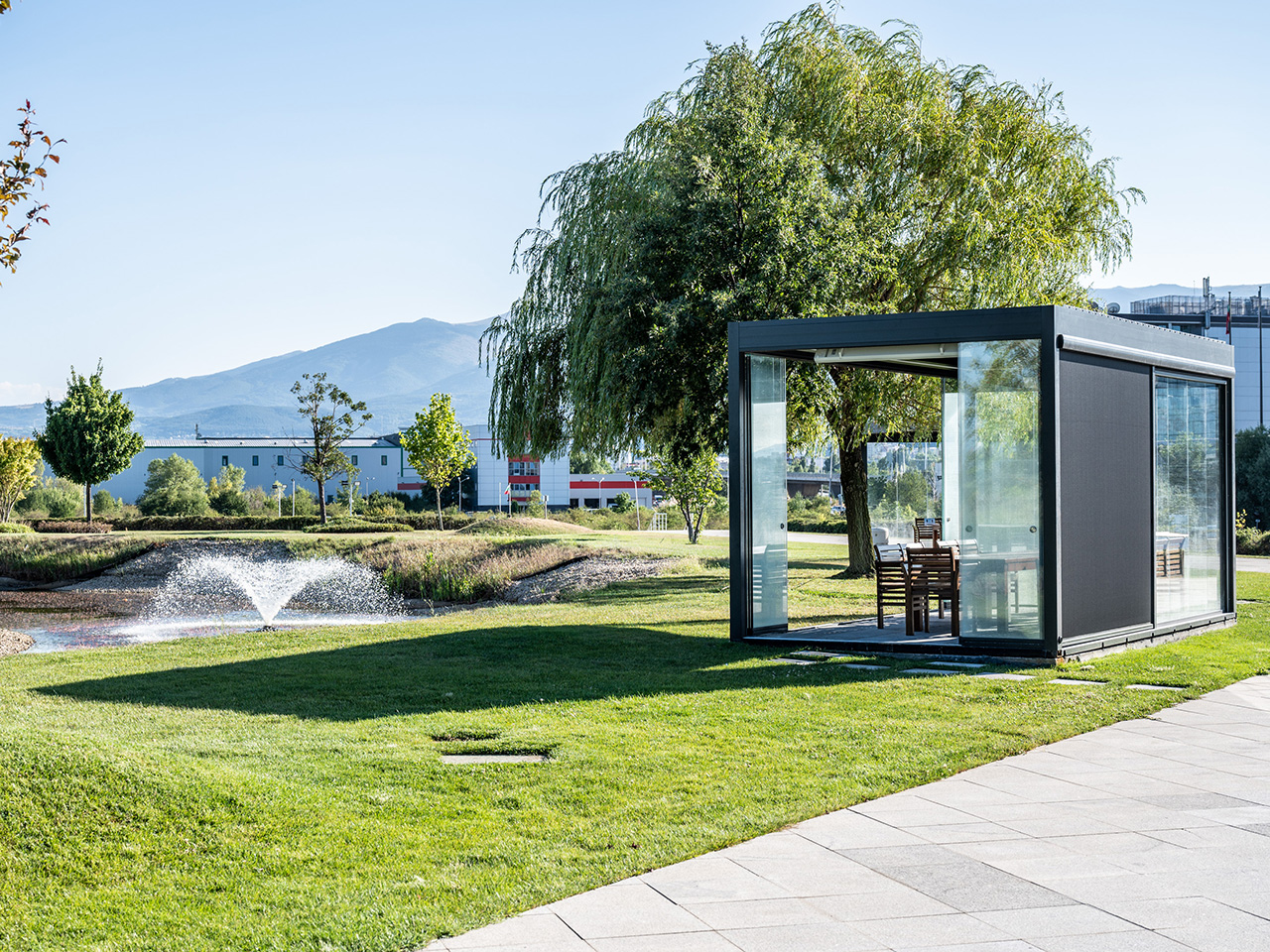
SAC comprises 47,000 sq. m of total leasable area across five mixed-use buildings, 940 parking spaces, and a 9,000 sq. m park environment featuring a central lake.
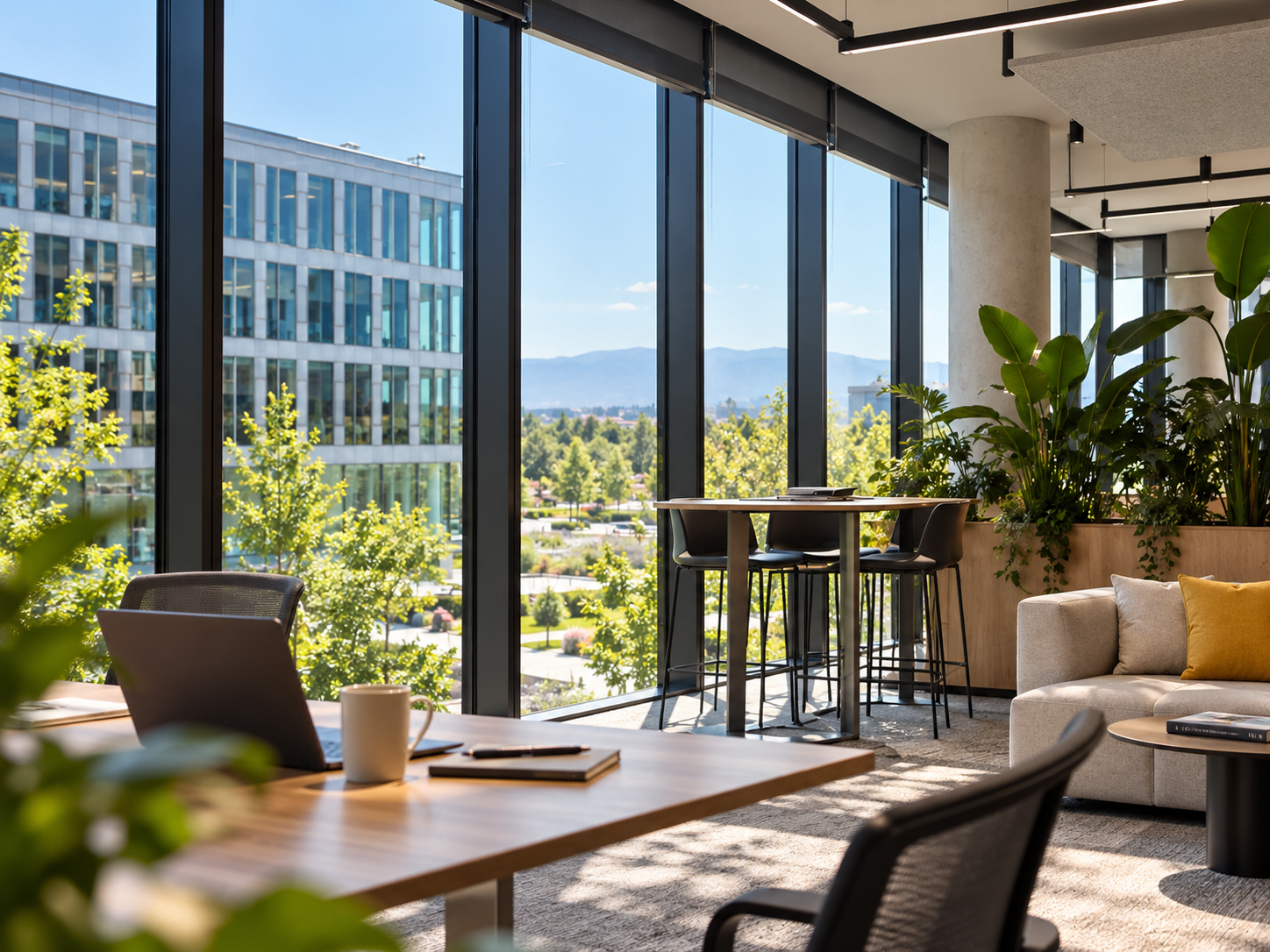
In addition to the companies' dedicated office spaces, the "Flex-R Lounge" addresses the need for supplementary work and meeting environments, while the park and common areas expand the range of available spaces for working and holding meetings throughout the day.
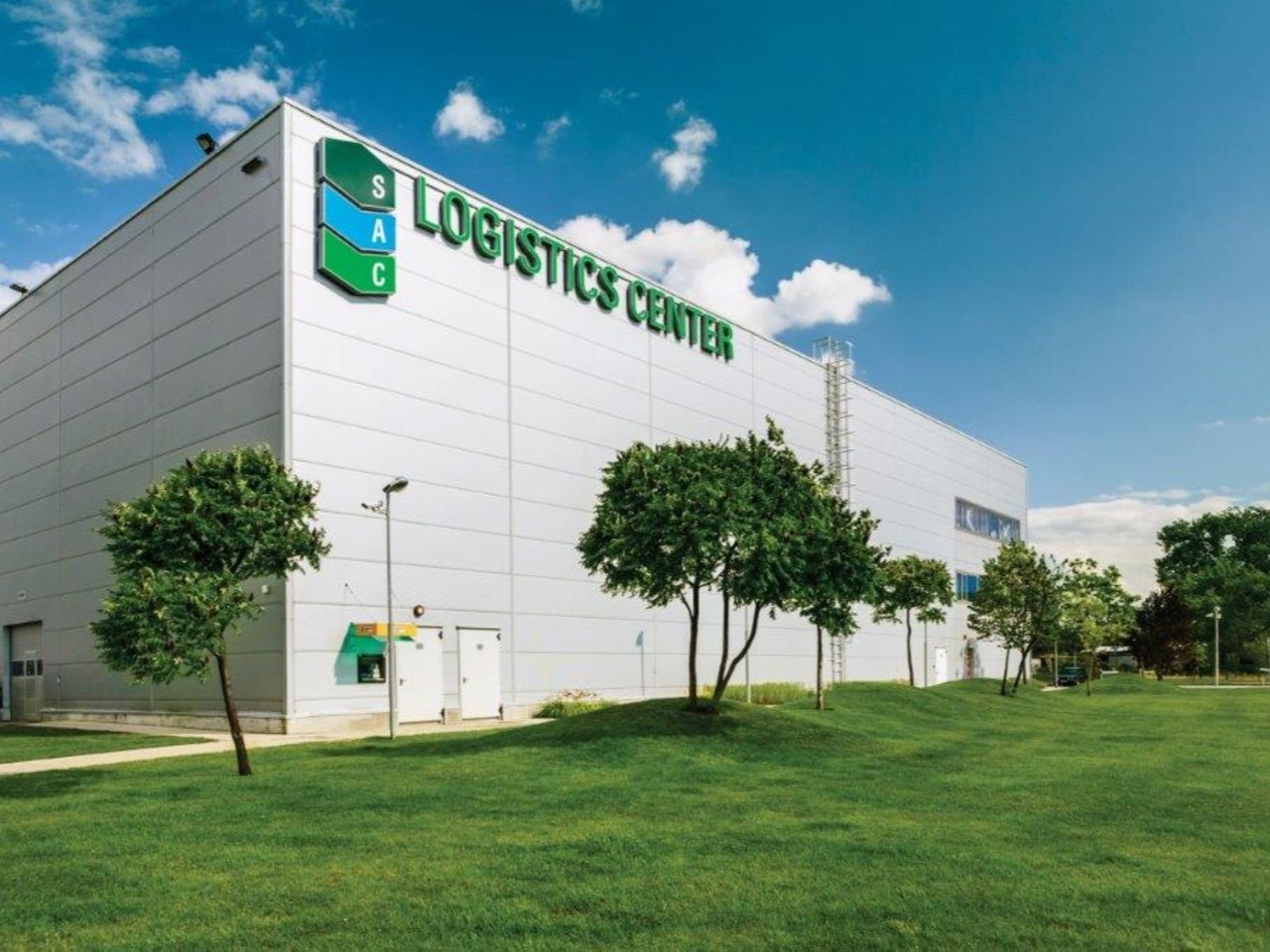
The development of building B04 adds another dimension: logistics and office space integrated into a single new structure, complete with a technology-driven management system that enables the monitoring of consumption...